Downtown Austin runs from Lady Bird Lake north toward the Capitol, between Shoal Creek on the west and Waller Creek on the east. It is the densest part of the city: office towers, hotels, the Second Street and Seaholm districts, Rainey Street’s converted bungalows, and a growing number of residential towers.
Most homes here are condominiums in high-rise and mid-rise buildings, with a smaller number of lofts and townhomes. Living downtown trades a yard for a doorstep on the lake trail, the parks, and the restaurants, so the building and the blocks around it matter as much as the floor plan.
Downtown at a glance
- Homes High-rise and mid-rise condominiums, lofts, and a few townhomes
- Setting Lady Bird Lake to the south, the Capitol to the north, creeks on either side
- Getting around Walkable core, Capital Metro buses and the Red Line’s Downtown Station, I-35 and MoPac at the edges
- Nearby Butler Hike-and-Bike Trail, Waterloo Greenway, Republic Square, Central Library
The districts
Downtown is a collection of distinct districts, each with its own pace.
- Congress Avenue The grand avenue from the river to the Capitol, lined with historic storefronts, the Paramount Theatre, and museums.
- Sixth Street Historic Sixth Street’s Victorian-era buildings are packed with bars and live music; West Sixth leans toward restaurants and lounges.
- Red River Cultural District Designated by the City in 2013, the 600 to 900 blocks of Red River Street hold many of Austin’s best-known music venues.
- Rainey Street Bungalows turned bars sit beside some of downtown’s newest residential towers, near the mouth of Waller Creek.
- Second Street District Shops, restaurants, ACL Live at the Moody Theater, and residential towers around City Hall.
- Warehouse District Older brick warehouses on the west side of downtown, now restaurants and nightlife.
- Seaholm District The 1950s Seaholm Power Plant, redeveloped with offices, homes, and shops beside the Central Library.
- Waterloo Greenway Parks and trails following Waller Creek from Waterloo Park toward Lady Bird Lake.
- Fifth Street Mexican American Heritage Corridor A corridor recognizing the Mexican American families and businesses that shaped East Fifth Street.
A short history of Downtown
- 1839 Austin is chosen as capital of the Republic of Texas, and Edwin Waller lays out a 14-block grid along the river with Congress Avenue at its center.
- 1886 The Driskill Hotel opens on Sixth Street.
- 1888 The Texas State Capitol, built of local red granite, is completed at the head of Congress Avenue.
- 1894–95 The City puts up its moonlight towers; the survivors are the last of their kind in the world.
- 1915 The Paramount Theatre opens on Congress Avenue.
- 1960 Longhorn Dam creates Town Lake, today’s Lady Bird Lake.
- 1980 A rebuilt Congress Avenue Bridge creates the crevices that draw its famous bat colony.
- 1987 The first South by Southwest festival is held.
- 1991 Austin adopts the slogan “Live Music Capital of the World.”
- 2007 Town Lake is renamed Lady Bird Lake.
- 2011 ACL Live at the Moody Theater opens as the home of the Austin City Limits television series.
- 2017 The new Central Library opens at the mouth of Shoal Creek.
What makes it Downtown
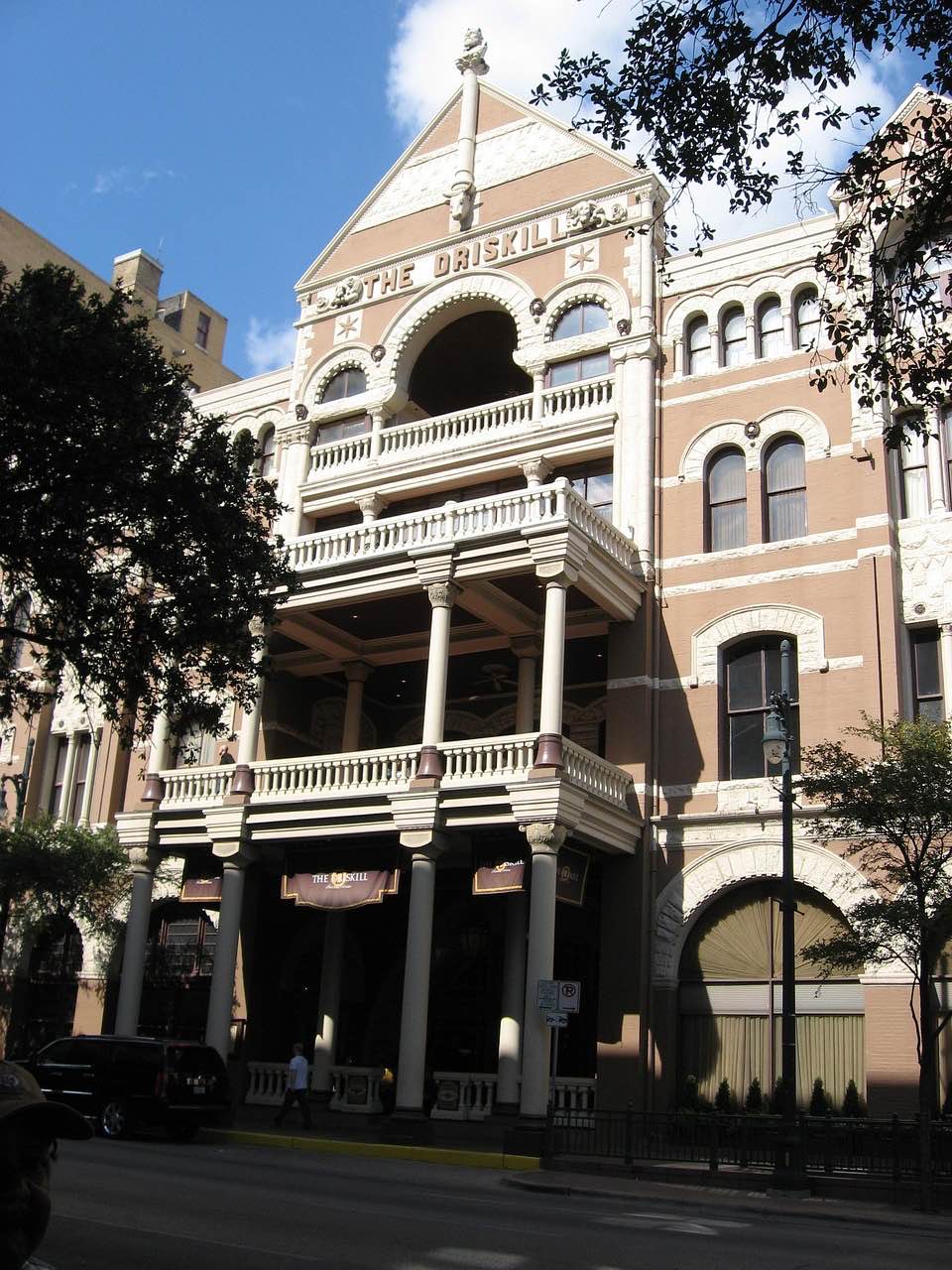
The Driskill opened in 1886, built by cattleman Jesse Driskill, and is still downtown’s grand historic hotel on Sixth Street.
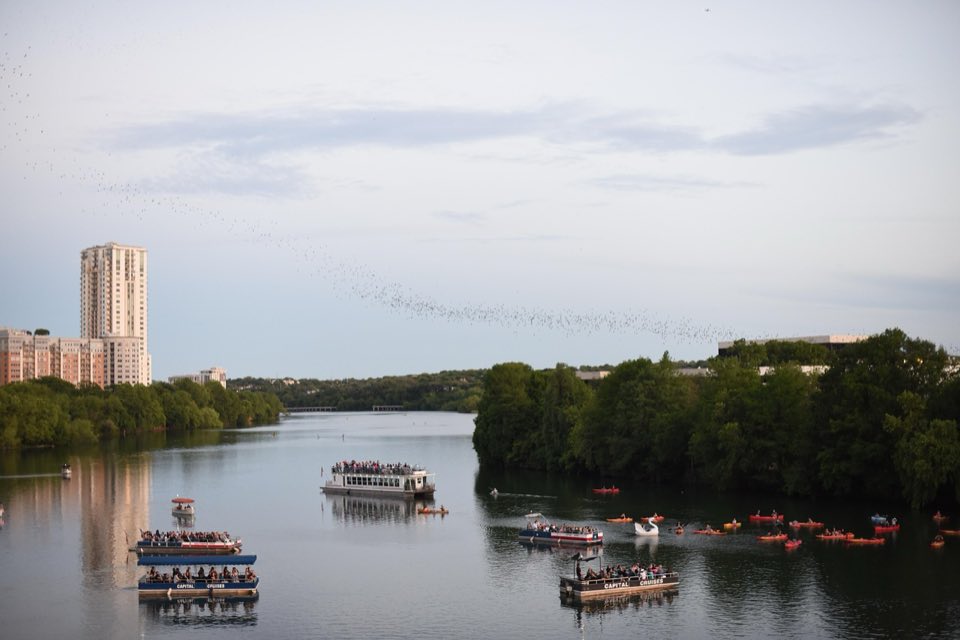
From spring into fall, a large colony of Mexican free-tailed bats streams out from under the Congress Avenue Bridge at dusk.
Things to do in Downtown
- Texas State Capitol Free guided tours of the building and its grounds start from the Capitol Visitors Center.
- Paramount Theatre A 1915 theater on Congress Avenue showing classic films, comedy, and concerts.
- The Driskill The 1886 hotel on Sixth Street, worth a walk through its lobby.
- Moonlight towers 165-foot towers from the 1890s that still light parts of central Austin.
- Museums Mexic-Arte Museum and The Contemporary Austin’s Jones Center on Congress Avenue, and the O. Henry Museum in Brush Square.
- Austin History Center The library’s local history archive, with exhibits on the city’s past.
- Willie Nelson statue Outside ACL Live on Second Street.
- Lady Bird Lake The Butler Hike-and-Bike Trail, its boardwalk, and rentals for kayaks and paddleboards.
The Congress Avenue Bridge bats
Since the Congress Avenue Bridge was rebuilt in 1980, Mexican free-tailed bats have roosted in the narrow crevices beneath it. The colony is widely described as the largest urban bat colony in North America, peaking at roughly 1.5 million bats in late summer, when the year’s pups begin to fly.
The bats spend roughly spring through fall in Austin and stream out around sunset to feed. August is usually the best month, and hot, dry evenings tend to bring the earliest and biggest flights. Sightings are never guaranteed, so arrive early and be patient.
How to watch
- From the bridge The sidewalks fill early on summer evenings; arrive well before sunset.
- From the shore The lawn and trail along the south bank beside the bridge give a wide view of the emergence.
- From the water Boat cruises and guided kayak and paddleboard tours on Lady Bird Lake time their trips to the flight; book ahead in summer and check current schedules.
- Bat Fest An August festival on the bridge with live music, food, arts and crafts, and a bat costume contest.
Culture, music, and shows in Downtown
- Live music The Red River Cultural District’s clubs, Sixth Street, and venues across downtown host shows most nights.
- ACL Live at the Moody Theater Concerts and tapings of Austin City Limits, the long-running public television music series.
- Moody Amphitheater An outdoor stage in Waterloo Park for concerts and events.
- The Paramount and the Long Center Film, comedy, and theater on Congress Avenue, with the Long Center’s performing arts just across the river.
Downtown through the year
- February The Austin Marathon runs through downtown.
- March South by Southwest brings music, film, and tech events to venues across downtown.
- Spring and fall The Pecan Street Festival fills Sixth Street with arts, crafts, and music.
- July 4 The Austin Symphony’s concert and fireworks at Vic Mathias Shores, across the lake.
- August Bat Fest on the Congress Avenue Bridge.
- November The Texas Book Festival takes over the Capitol grounds.
- Saturdays A farmers market in Republic Square.
Exact dates shift a little each year. For what’s on right now, check upcoming Austin events.
Keep Austin weird
“Keep Austin Weird” began in 2000, when Austin Community College librarian Red Wassenich used the phrase on a call to a local radio show. It caught on as a bumper sticker and became a rallying cry for local businesses and the city’s offbeat spirit.
- Moonlight towers Victorian-era streetlights 165 feet tall, still lit at night.
- Museum of the Weird A small cabinet of curiosities on Sixth Street.
- Leslie Cochran The cross-dressing activist and perennial mayoral candidate who was a downtown fixture until his death in 2012.
- Eeyore’s Birthday Party A costumed spring gathering in Pease Park, just northwest of downtown.
- Pedicabs Bicycle taxis are a downtown staple, especially on busy nights.
Tours and visitor resources in Downtown
- Texas State Capitol Free guided tours; check the State Preservation Board for times.
- Visit Austin Visitor Center Maps, tickets, and local recommendations downtown.
- Lady Bird Lake Sightseeing and bat-watching cruises, plus kayak and paddleboard rentals and guided paddles.
- Austin History Center Exhibits and archives for anyone curious about how downtown grew.
- On your own Walk Congress Avenue from the river to the Capitol, then Sixth Street, the Second Street District, and the lake trail.
What’s changing in Downtown
- 2014 The Butler Trail boardwalk opens, closing a gap on the lake’s south shore.
- 2015 The Waller Creek tunnel begins carrying floodwater under downtown, opening the creek corridor to new parks.
- 2021 Waterloo Park reopens with the Moody Amphitheater.
- 2024 Work begins on rebuilding I-35 through central Austin, with City plans for caps and connections over the lowered highway.
- 2025 The Austin Convention Center closes for a $1.6 billion rebuild that will reopen Second and Third streets through the site; reopening is planned for spring 2029.
- 2026 Waterline is completed near Rainey Street, 74 stories and 1,025 feet, as the tallest building in Texas.
- 2026 Waterloo Greenway opens its southern stretch, The Confluence, from Fourth Street to the lake.
- Ahead Project Connect, approved by voters in 2020, plans light rail through downtown; check current timelines.
Buying a home in Downtown
Downtown ownership usually means a condominium, so read the association’s budget and reserve study along with the listing. Ask what the dues cover, how reserves are funded, whether any special assessments are planned or under discussion, and when major building systems such as elevators, roofs, and windows were last replaced. Review the governing documents for rules on pets, leasing, renovations, deliveries, and move-ins.
Confirm which parking spaces and storage convey with the unit, how guest parking works, and what the building’s insurance covers compared with the policy you would need. If you are thinking about renting the home out, check the building’s leasing rules and the City of Austin’s short-term rental requirements before you assume it is allowed. In a new building, ask about the developer’s warranty and when control of the association passed, or will pass, to the owners.
The I-35 rebuild and Project Connect will change how parts of central Austin feel and how you move through them. I wrote a buyer-focused overview: I-35 and Project Connect: what Austin buyers should know.
Daily life in Downtown
The Ann and Roy Butler Hike-and-Bike Trail circles Lady Bird Lake along downtown’s southern edge, and from spring into fall crowds gather at dusk on the Congress Avenue Bridge to watch its bat colony fly out. Waterloo Greenway follows Waller Creek on the east side, with its newly opened southern stretch running from Fourth Street to the lake.
Republic Square hosts events and a farmers market, the Austin Central Library sits at the mouth of Shoal Creek, and the Texas State Capitol grounds anchor the north end. Walk from a specific building to the places you would actually use, at the times you would use them.
Getting around Downtown
Much of daily life downtown can be done on foot, by bike, or by bus. Capital Metro’s Red Line commuter rail stops at Downtown Station, and MoPac and I-35 bound the area for longer drives. Traffic and event closures change the picture, so test the commute you would actually make, at the hours you would make it.
Questions to ask at a showing in Downtown
- What do the monthly dues cover, and what is the reserve fund balance?
- Are any special assessments planned or under discussion?
- Which parking spaces and storage units convey with this unit?
- What are the building’s rules on leasing, pets, and renovations?
- How does the unit sound with windows closed at night and on weekends?
- Is any construction planned on nearby lots that could change the view or light?
Before you decide on Downtown
Visit the building on a weekday and a weekend night. Downtown sound, light, and traffic change by block, floor, and which way a unit faces. Check views and sunlight at different times of day, and test the commute or transit route you expect to use. For transit, confirm current service with Capital Metro; for schools, confirm the assignment directly with the district.
Notes on Downtown
Curious about a home downtown?
Bring the building and unit you are considering, and let’s discuss what to investigate next.
Sources: Waterloo Greenway Conservancy, Downtown Austin Alliance, Austin Central Library, State Preservation Board (Texas Capitol), Capital Metro rail, and City of Austin short-term rentals.